admin
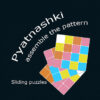
This sliding puzzle puts a visual twist on Pyatnashki, the familiar tile-arranging game. Instead of putting numbered pieces in sequence, the goal is to assemble a specific design. The change shifts the challenge from counting and ordering tiles to recognizing how parts of an image fit together.
How the sliding puzzle differs from classic Pyatnashki
Traditional Pyatnashki is usually about restoring numbers to their intended order. In this version, the target is a pattern. Each move contributes to rebuilding the design, so players need to pay attention to colors, shapes, lines, and the way neighboring image sections connect.
The basic approach remains familiar to anyone who has played a sliding-tile game: plan moves that bring pieces toward their correct locations. The picture-based objective can feel more intuitive than a number sequence, but it may also be harder to track because pieces that look similar can be easy to confuse.
Tips for solving the pattern
- Study the target first. Look for distinctive features, such as a strong color boundary or a recognizable part of the design, before making a series of moves.
- Use edges and corners as clues. Image sections that clearly belong along an outside edge can help establish the design’s overall orientation.
- Work in small stages. Focus on positioning a few recognizable pieces at a time rather than trying to solve the entire pattern in one stretch.
- Check neighboring pieces. A tile may look plausible on its own, but the lines and colors at its borders can reveal whether it belongs beside another piece.
- Pause before moving a correctly placed tile. If a move disrupts an area you have already arranged, consider whether there is another route that keeps that progress intact.
Is a picture puzzle easier than a number puzzle?
That depends on how you prefer to recognize patterns. A numbered puzzle gives each tile a clear identity, while an image puzzle relies on visual details and context. A bold, distinct design may be easier to follow at a glance; similar-looking sections can require more careful comparison. The challenge also depends on the board and the available moves, so there is no single answer for every player.
If you are new to this style of game, take your time and use the design itself as a guide. Avoid moving pieces at random: even a brief plan can make it easier to see which move will open a useful path. If the arrangement becomes confusing, pause and compare the current board with the target again.
Try the Pyatnashki pattern challenge
This Pyatnashki-inspired sliding puzzle keeps the recognizable tile-moving concept while replacing number order with a visual goal. Whether assembling a pattern feels simpler or more demanding is something each player can judge for themselves. Look closely, move thoughtfully, and use the image as your guide to complete the sliding puzzle.